

Where to Stay in Kiruna and Swedish Lapland with Kids: The Best Family-Friendly Cabins, Lodges and Hotels

Updated: Aug 3
The accommodation question for Swedish Lapland is more interesting than most, because where you sleep directly shapes what you experience. Stay centrally in Kiruna and you're close to tour operators and restaurants but a drive away from the Northern Lights. Stay riverside near Jukkasjärvi and you can walk across the frozen Torne River to the Icehotel and watch the Aurora from your doorstep after the kids are in bed. Stay in Abisko and you're inside the national park itself, which is the best place in the world to see the Aurora, but with very limited options and everything needing to be booked months in advance.

We spent five nights in the region in mid-March whilst I was 7 months pregant with our 3 year old daughter, staying at a lakeside cabin on a husky farm near Jukkasjärvi. It worked really well for us: direct access to a frozen lake for sledding and Aurora-watching, fifteen dogs who became our daughter's entire world for the week, and a host, Zbynek, who took us dogsledding across the lake to a traditional Sami goahti for fika and warm cinnamon buns. It's a rustic, characterful setup that won't suit every family, but for us it was exactly right.
The options below cover all the main areas, from Kiruna town to the riverside villages and Abisko, and span everything from a budget town apartment to the most extraordinary ice hotel in the world. For the full trip plan including dogsledding, Northern Lights, Abisko National Park and the Sami Museum, check out our 5-night Swedish Lapland itinerary with kids.
A Few Things to Know Before You Book
Plan Around Northern Lights Access
The single most important thing to factor into your accommodation choice in Swedish Lapland is Northern Lights access. If seeing the Aurora is high on your list (and it usually is), you want to stay somewhere with unobstructed sky access that doesn't require driving to find dark skies after bedtime. A cabin next to a lake or river, away from town light pollution, is ideal. Abisko is the extreme version of this, known for the "blue hole" phenomenon that keeps skies clear when everywhere else is clouded over.

Running Water: Worth Checking Before You Book
It's more common than you might expect for Swedish cabins to have no running water, particularly the more rustic and remote lakeside options. This is a part of Swedish outdoor culture (which I'm used to from my childhood), and the hosts who offer these cabins are well set up for it: outdoor toilets are managed and clean, regular provision of drinking water and you're given clear instructions on arrival. We stayed without running water for five nights, travelling with a 3 year old and seven months pregnant, and we adapted surprisingly quickly but I wouldn't pretend it suits every family. If running water is something you'd struggle without, check the listing carefully before booking. All properties in this post have running water unless explicitly noted.
Getting There
The easiest way to reach Kiruna is by direct flight from Stockholm with SAS. Kiruna Airport is about fifteen minutes from the town centre. Hiring a car is strongly recommended because it gives you total flexibility to explore Abisko, Nikkaluokta, Jukkasjärvi and the surrounding wilderness on your own schedule. In winter all hire cars come with winter tyres and are safe on snowy roads. It was our first time doing any form of winter driving and we found the conditions very manageable.
Getting Around
Most activities and tour operators are in or around Kiruna and Jukkasjärvi. Abisko is about an hour's drive west. Public buses connect the main towns but run infrequently, so a car is the best option if you want to explore freely. Many tour operators offer hotel transfers, which is useful for evening Northern Lights tours if you don't want to drive in the dark.
When to Visit
The winter season runs from around October through to late March. We went in mid-March and I would recommend it: days are longer with sunrise and sunset at similar times to the UK, temperatures are milder (we had lows of -6°C at night), the season is quieter and cheaper, and you still get proper winter conditions. December and January are colder and darker, with fewer daylight hours for activities, but the longest polar nights give the most Northern Lights opportunity.
Where to Stay in Swedish Lapland
Property | Area | Price from | Best For |
Poikkijärvi / lake | ~£100/night | Families who want a husky farm, frozen lake access and Aurora from the doorstep and don't mind not having running water | |
Kiruna town | ~£150/night | Families wanting central access to tours plus a spa for the adults | |
Poikkijärvi / river | ~£120/night | Glass igloo seekers who want Aurora from bed and a short walk to the Icehotel | |
Jukkasjärvi / river | ~£130/night | Design-led couples who want a beautiful small lodge near the river | |
Jukkasjärvi | ~£160/night (warm room) | Anyone who wants to stay inside the world's most unique hotel | |
Abisko | ~£100/night | Families who want to be inside the national park with the best Northern Lights odds in the world |
Kiruna Town
Kiruna is the main hub of Swedish Lapland: a small, unpretentious mining town that was actually physically relocated a few kilometres east between 2012 and 2024 when the iron ore mine beneath it started undermining the foundations. The new town centre is compact and walkable, with a handful of restaurants, a supermarket, and a cluster of tour operators who can book you dogsledding, snowmobiling, Northern Lights tours and everything else. Staying in Kiruna gives you easy access to logistics and some of the better tour departures, but you'll need to drive to find proper dark skies for Aurora watching.
1. Camp Ripan (from around £150/night)
Best for: families who want central access to tours and restaurants, a spa evening once the kids are asleep, and chalet-style rooms that feel a step above a hotel
If you want central access to tours and restaurants alongside a bit of luxury once the kids are asleep, this family owned property is brilliant. It sits right at the edge of town with ski trails starting at the door. The private wooden chalets have proper kitchenettes and direct outdoor access, making coming and going with small children much easier. The restaurant is fantastic, but the real highlight for parents is the Aurora Spa. It is a full spa operation with a sauna, steam room and outdoor hot pools. Make sure to book a treatment slot in advance in peak season, and remember to bring your own travel cot as they do not provide them.
Poikkijärvi and the Torne River
The villages strung along the Torne River between Kiruna and Jukkasjärvi are where the most interesting accommodation options in the region sit. Poikkijärvi, about twelve kilometres from Kiruna, is where we stayed: a small collection of properties next to a frozen lake, far enough from the town for proper dark skies but close enough to drive in for tours and supplies. In winter the Torne freezes solid so the frozen river and lake surface becomes navigable by dog sledding and snow mobiles.

2. Lakeview Cabin by Bohemian Lucky Bastards (from around £100/night)
Best for: adventurous families comfortable with a rustic setup who want a husky farm, frozen lake access and Aurora from the doorstep
Zbynek and Evy run a small husky farm on the lake with fifteen dogs, and staying here means your kids will spend most of the trip trying to hug all of them. The cabin sits directly on the frozen lake with open sky views. On two of our five nights we walked straight out onto the ice in the middle of the night with the baby monitor and watched the Northern Lights without having to drive anywhere. They also have a sauna with lake views, so even at seven months pregnant I was able to get warm before taking a dip in the ice hole they had cut out (which is covered in the daytime so toddlers cannot fall in!). We even did our dogsledding tour with Zbynek across the Torne River to a traditional Sami goahti for coffee and cinnamon buns by the fire.
Just a quick heads up: there is no running water here. This is common for this type of Swedish cabin and perfectly manageable, but it is not for everyone. Staying on a husky farm also sounds like it might mean a lot of barking. In our experience the dogs were actually very quiet overnight, but it is something to factor in if you have a light sleeper. It is a genuinely different kind of experience, and if that sounds appealing rather than off putting, it is a very good one.

3. Aurora River Camp (from around £120/night)
Best for: families who want glass igloo accommodation, direct river views for Aurora watching and an easy walk to the Icehotel
If you are looking for that classic glass igloo experience, these twelve cabins set along the Torne River are a fantastic choice. The transparent ceiling frames the night sky so you can watch the Northern Lights without leaving your bed, which has obvious appeal when you have a sleeping three year old in the corner of the room. It is just a short drive from Kiruna and a 20 minute walk across the frozen river to the Icehotel. The camp has a communal kitchen where you can prepare food, and the hosts are incredibly generous with their Aurora forecast tips. Cots are available free of charge for babies under two if you request them.
Jukkasjärvi
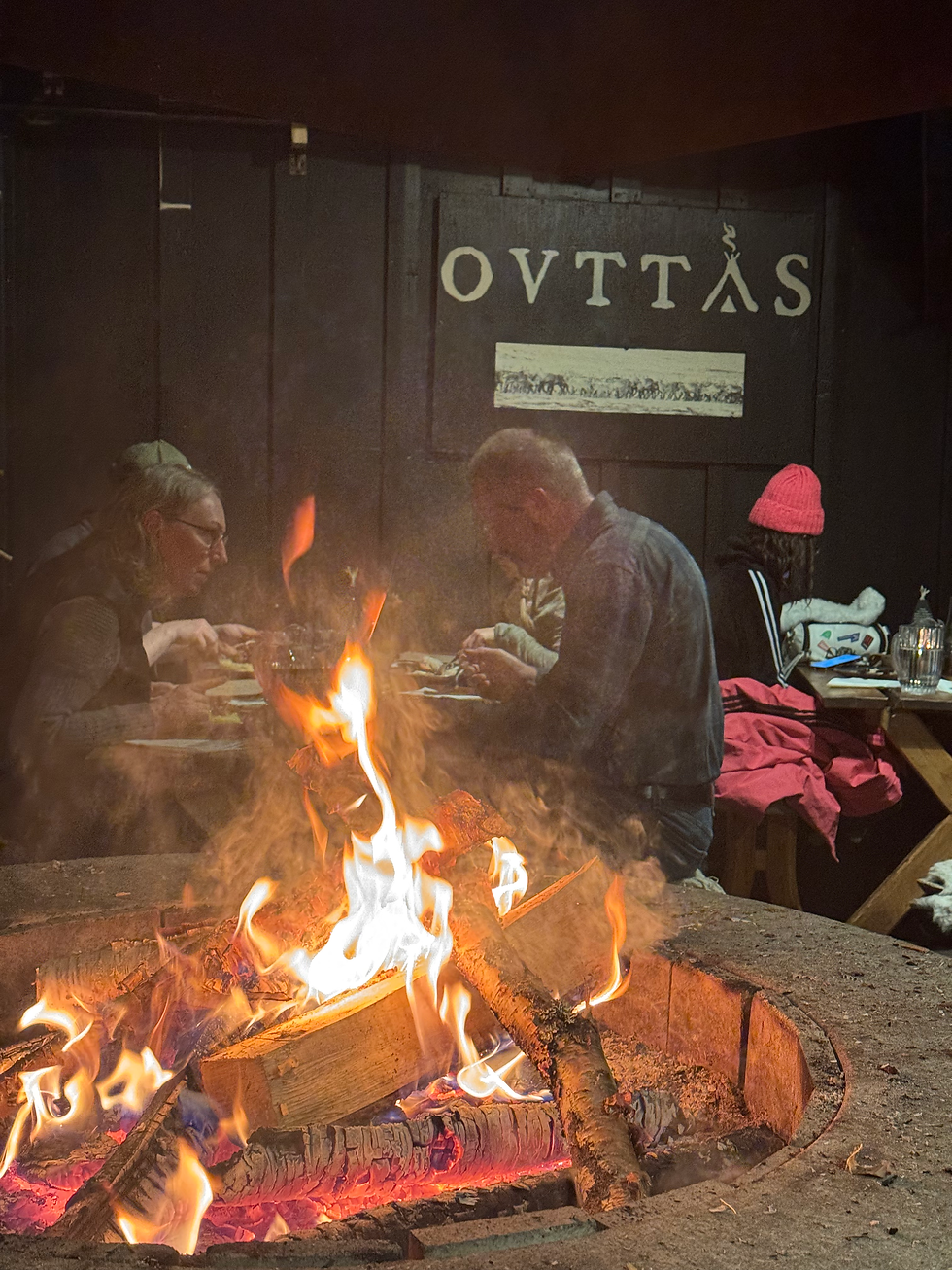
Jukkasjärvi is a small village on the Torne River, about eighteen kilometres from Kiruna, and its claim to fame is the Icehotel: the world's original and most famous ice hotel, rebuilt from scratch every winter from ice harvested directly from the river beside it. The village also has the Sami open air museum, the Ovttas restaurant (where we had reindeer stew inside a lavvu tent with a fire in the middle), and a supermarket on the far bank. It's a destination in itself rather than just a base, and a night here is worth combining with a few nights elsewhere rather than replacing them.
4. Reindeer River Lights Lodge (from around £130/night)
Best for: adults who want a stylish, quietly beautiful small lodge near the river with a sauna and a view that looks like a film set
If you are looking for that classic glass igloo experience, these twelve cabins set along the Torne River are a fantastic choice. The transparent ceiling frames the night sky so you can watch the Northern Lights without leaving your bed, which has obvious appeal if you have a sleeping child in the corner of the room. It is just a short drive from Kiruna and a 20 minute walk across the frozen river to the Icehotel. The camp has a communal kitchen where you can prepare food, and the hosts are incredibly generous with their Aurora forecast tips. Cots are available free of charge for babies under two if you request them.

5. Icehotel (from around £160/night warm room, from around £500/night ice Art Suite)
Best for: the bucket-list night in a place that doesn't exist anywhere else on earth
Founded in 1989, rebuilt from scratch every winter, melted back into the Torne River every spring. The Ice Art Suites are carved fresh each year and held at below freezing temperatures, but the hotel officially recommends children be at least seven years old to sleep in them. With a young toddler, booking a "warm room" is the most practical choice. You are still in the same building with full access to the ice bar, the ice chapel, and the whole exhibition, but you get a heated bathroom and a proper bed. If you choose to stay in the Ice Art Suites you will be given beds covered in reindeer hide and sleeping bags rated to -25°C to stay warm in this once in a lifetime experience.
A bookable sauna experience with outdoor wood-burning hot tub and ice bath is available at extra cost. Breakfast is included. Cots are available on request. The Icehotel is 365 (the permanent year-round element) stays open even in summer.
Abisko
Abisko National Park is an hour's drive west of Kiruna on the shore of Lake Torneträsk and considered the best place in the world to see the Northern Lights due to the "blue hole" microclimate that keeps skies clear when cloud covers the surrounding area. It's where we spent a full day on our trip: the cable car up Mount Nuolja to the Aurora Sky Station, the walk to the frozen Kanjonen canyon, the stunning views across the lake to the mountains. Accommodation is limited to a handful of options; the STF station is by far the most established. Book very early for winter dates.

6. STF Abisko Turiststation (from around £100/night)
Best for: those who want to be completely inside the national park with the best Northern Lights statistics in the world, a restaurant, a sauna and hiking from the door
If you want to be completely inside the national park with the best Northern Lights statistics in the world, book this mountain station. They have been welcoming winter visitors since 1902 and know exactly what cold parents need: a proper fireplace, a library, a sauna and a welcoming bar. Family rooms and cots are available, and the Aurora Sky Station is just a short cable car ride away. Remember that bedlinen and towels are not included in the room rate for family rooms and must be rented on site or brought from home, which is very common in Swedish culture.

Our Verdict
If you're visiting for the first time with young children, my suggestion would be to split your nights between two areas rather than committing all of them to one. Two or three nights on the Torne River (the Lakeview Cabin or Aurora River Camp) gives you the husky farm or glass igloo experience and direct Aurora access. Adding a night at the Icehotel gives you a once-in-a-lifetime experience. If you have the time, a night at Abisko rounds out the trip with the best Northern Lights odds and the national park on your doorstep.

The one combination I would avoid is staying only in Kiruna town for the whole trip. It may be convenient but you lose the thing that makes Swedish Lapland feel different from anywhere else: the silence, the darkness and the wilderness of this beautiful landscape.
For everything else about planning the trip, including dogsledding operators, the Sami Museum, moose spotting on the Nikkaluokta road, and a full cost breakdown comparing Swedish versus Finnish Lapland, read our 5-night Swedish Lapland itinerary with kids.


