

Northern Argentina Road Trip: The Ultimate 8-Day Family Itinerary (Salta to Jujuy)

This road trip is still the most insane road trip we’ve ever done, and I think it’s going to be a difficult one to top! It’s definitely one of those “it’s the journey not the destination” types of holidays, where every drive is different from the one before - from desert landscapes to jungle, from lush, green mountains to salt flats. For a region with stunning beauty and some of the worlds best wine we hardly met any other tourists!

It does involve quite a bit of driving, which is of course tiring for young kids - our daughter was 2 years old and still napping when we did this trip, so we tried to cover as much distance as possible while she was sleeping, and break regularly when she was awake (you’ll want to do this anyway because the scenery is just spectacular!). We had 8 days in total for this trip, which I would say was just enough to see everything we wanted to see, but had we had a bit more time, we would have been able to have a few more days of rest in between.
Below is everything you need to know before going and our 8-day itinerary. If you’re travelling with young children, you might also want to bookmark our guide to road tripping abroad with a toddler — link at the bottom of this post. Skip to itinerary
When to Go to Northern Argentina with Kids
The seasons in the Salta and Jujuy provinces differ from other parts of Argentina because the region is a high-altitude desert. Generally speaking, the best times to go are during Autumn (April to June) and Spring (September to November). This is when the weather is the most reliable with mostly clear skies and the temperature is a bit milder (around 17-22°C in the day). June-August is Winter in Argentina and because of the high altitude, it can get really cold, especially at night, with temperatures dropping below zero.

December-March is summer, and this is also the rainiest season. That said, we went mid-March and hardly had any rain on our trip (apart from maybe one or two days with a few showers). The days were very hot though, especially when driving through the desert, and because it had been raining, there were flood risks on some routes, so if you do go this time of year, make sure to keep an eye on road conditions! The rain also meant the valleys were very lush and green, which was a nice contrast from the desert-like climate of other parts of the road trip.
How to Get to Northern Argentina (Flights & Airports)
There are two main airports in the region - Salta (SLA) and Jujuy (JUJ). Neither has many international connections so the easiest way is to go via a bigger international hub in Argentina, most commonly Buenos Aires. We flew in and out of Salta, which is the bigger airport of the two and also has better options for car hire. We flew from the Iguazu Falls and then onwards to Buenos Aires - both flights were around two hours long and fairly cheap, flying with Aerolíneas Argentinas one way and FlyBondi the other.
One thing to note is that Buenos Aires has two airports - one closer to the city, Aeroparque (AEP), for domestic flights, and one bigger, international airport, Ezeiza (EZE), which is a bit further out. If you are only transiting through Buenos Aires, make sure to check what airport you're flying in and out of and allow plenty of time if you need to change airports!
Where to Stay in Northern Argentina: Our Favourite Hotels & Eco Lodges for Families
One of my favourite things about this road trip are all the unique places we stayed at! You can really do a mix of eco lodges, cabins, boutique hotels, wine resorts and even farm stays. Below are some of our favourites, as well as a couple I'd love to stay at if we went back!
Salta/Coronel Moldes
Cueva Ancestral - like staying in a work of art! Such a cleverly thought out building, with lots of quirky details. The location is also stunning - about an hour from Salta in the middle of the hills, right next to Cabra Corral Lake.

House of Jasmines Relais & Châteaux - absolutely gorgeous resort - we sadly only went here for dinner, but ended up spending the whole afternoon/evening here, exploring the grounds and enjoying a lovely meal. If I came back to Salta this is where I would stay!
Cafayate
Casa Melita - lovely, spacious villa that had everything we needed, including a beautiful garden with a small pool. It's in a gated area and felt very safe, whilst still being close to the town centre.

Piattelli Wine Resort Hotel - we spent the day at this beautiful vineyard and only found out when we got there that it has also turned into a wine resort! If you are looking for something a bit more special, I would definitely recommend staying here - the grounds are absolutely gorgeous and the wine and food was exceptional.
Cachí
Cabaña Abra Del Monte - about 10 minutes from Cachí in the hills, this was the perfect cabin to enjoy the beautiful nature and fall asleep under a million stars!

Miraluna Bodega Boutique - if you want to be closer to town and want more in terms of amenities, I would recommend this boutique hotel next to the mountains. It has family rooms, beautiful gardens and a swimming pool overlooking the mountains.
Tilcara/Maimará
Dormir con Llamas - one of our favourite stays of the entire trip! The entire experience felt so wholesome - the location is beautiful next to the mountains in Maimará, and hosts Fran and Kely were so lovely, helping us with anything we might need. But the thing my daughter enjoyed most was getting to feed the llamas!

Apartamento en el vivero - if you prefer to be in the slightly bigger town Tilcara, this is the place we nearly booked! It looks like a private little oasis with the most beautiful garden.
Practical Tips for Northern Argentina: Altitude, Cash & Getting Around
As it is a high-altitude region, many of the sights are above an altitude of 3,500 metres. It's recommended to start off somewhere that has a lower altitude, like the city of Salta, to gradually get used to it and avoid altitude sickness, especially when travelling with kids. Make sure to drink more water than you think you need, you might also see locals chewing coca leaves as a natural remedy for altitude sickness - this is perfectly legal and culturally significant here.
It’s also good to know some basic Spanish as many people don’t speak English - I’d recommend downloading Google Translate for offline use before you go, and make sure to bring sufficient cash - a lot of smaller places still don't accept card payments and we struggled to find ATM, and when we did, we could only withdraw a set amount per day.
Northern Argentina 8-Day Road Trip Itinerary at a Glance
Day | Drive | Key Stops | Recommended Sleep |
1 | Salta old town, Cabra Corral Lake | ||
2 | Garganta del Diablo, Mirador Tres Cruces, Quebrada de las Conchas | ||
3 | Piattelli Vineyard & wine tasting | ||
4 | Quebrada de las Flechas, Molinos, Río Calchaquí detour | ||
5 | Cachí market, Parque Los Cardones, Ruta 33 mountain pass | Salta | |
6 | San Salvador de Jujuy, Tilcara market, Plazoleta viewpoint | ||
7 | Purmamarca 7 Coloured Mountain, Cuesta de Lipán, salt flats | ||
8 | Jungle drive, Dique la Ciénaga lunch, House of Jasmines dinner |
Day 1: Salta, Coronel Moldes & Cabra Corral
We arrived around lunchtime and started our day having lunch at Patio San Francisco before exploring Salta. Salta is the provincial capital and has that classic Spanish colonial architecture and the city centres around the square Plaza 9 de Julio.
As we knew we were coming back at the end of the road trip we mainly walked the streets in central Salta, browsing a few shops and looking at some of the beautiful churches and basilicas.
In the afternoon, we started making our way out of Salta, to Coronel Moldes where we were staying for the night. Coronel Moldes is a small village about an hour south of Salta, surrounded by lush green hills and close to Cabra Corral lake.
The main reason why we decided to stay here instead of Salta is because we had found a really interesting place to stay called Cueva Ancestral. The house is set up on a hill with beautiful views and the house itself has a very unique architectural design.

After settling in, we went for a drive around the beautiful lake and found a spot to stop and go for a little wander. It's a nice spot for a drive, and only a short drive from our accommodation, so it was an easy, doable excursion before dinner.
We ended the day with dinner in the garden, followed by a beautiful sunset over the hills.
Day 2: Coronel Moldes to Cafayate
This was the first proper day of our road trip, driving further south towards Cafayate. If you were to drive non-stop it would probably take 4-5 hours, but as I mentioned, the drives really make the trip on this road trip so each day is pretty much a full day of driving and stopping off at various points!
After breakfast, we spent a bit of time in Coronel Moldes, a small village which has a couple of shops, cafes and a decent sized playground. We knew it was going to be a long day of driving so we wanted to make sure our daughter had a proper play before hitting the road!
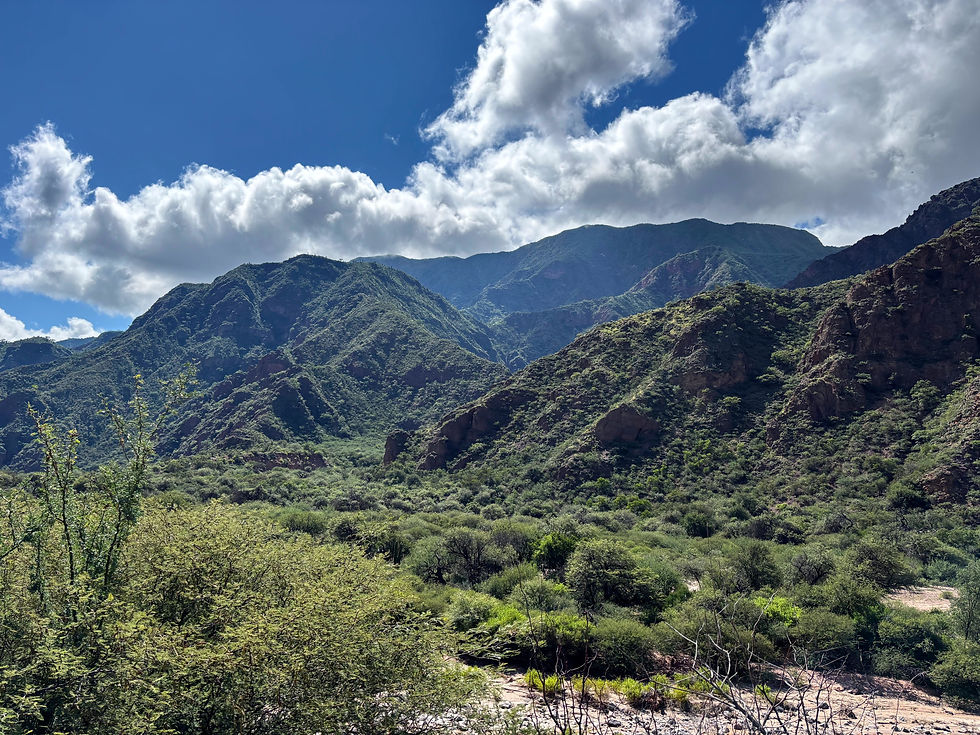
The landscape starts off really green with big, rolling mountains, and then turns more red/purple with rugged rock formations and canyons, similar to the landscape around northern Arizona/southern Utah. We didn’t drive through any major towns so I would recommend bringing plenty of water and a packed lunch, especially if travelling with kids!
You’ll want to just pull over on the side of the road to take in the views, but there are also a few viewpoints/sites of interests that I would recommend stopping at including: Mirador Guachipas, Garganta del Diablo (Devil’s Throat), Mirador Tres Cruces, El Obelisko, Mirador del Valle los Colorados, Quebrada de las Conchas and Las Ventanas.

Our first, slightly longer stop was at Garganta del Diablo (Devil’s Throat), where we also stopped for lunch. Garganta del Diablo is a massive, naturally carved rock formation in the Quebrada de las Conchas (Shells' Ravine). It’s a short walk from the car park and there are a few stalls selling souvenirs and crafts on the walk over. You won't need a huge amount of time here as you're not allowed to venture further into the ravine, but it's a cool place to see!

Next we stopped at Mirador Tres Cruces, and this was one of the prettiest views from today’s drive! It’s again just a short walk up a hill from the car park and the landscape is really spectacular, stretching for miles with the mountains shifting in different hues of red, orange and purple.

We continued to make regular stops to take in the beautiful scenery and to let our daughter have a bit of a run around, and eventually arrived in Cafayate late afternoon. We spent the night in the lovely Casa Melita - a beautifully decorated house with our private garden and swimming pool!
Cafayate is famous for its high-altitude wines and the town is full of "bodegas" - wine bars serving local wines - so after a bit of a rest and a dip in the pool we had some dinner and local wine in town before calling it a night.
Day 3: Piattelli Vineyard
As Cafayate is known for its wineries, we couldn’t spend the day here without visiting one of the vineyards! It was also my husband’s birthday today, so that felt like a proper way to celebrate his birthday.

We had been recommended to go to Piattelli by some friends who had previously been, and it was a really lovely place to visit. Piattelli is known for high quality wines, and they also have a vineyard in Mendoza, but this the brand's flagship location.
They have a lovely restaurant serving great food (and of course great wine) and also do wine tastings and tours of the vineyard and cellars. Kids are welcome everywhere apart from the wine tastings, but these were quite short (20-30 mins) so we took it in turns while the other parent took our daughter and explored the grounds (which she really enjoyed, especially as she encountered a fox amongst the vines!).
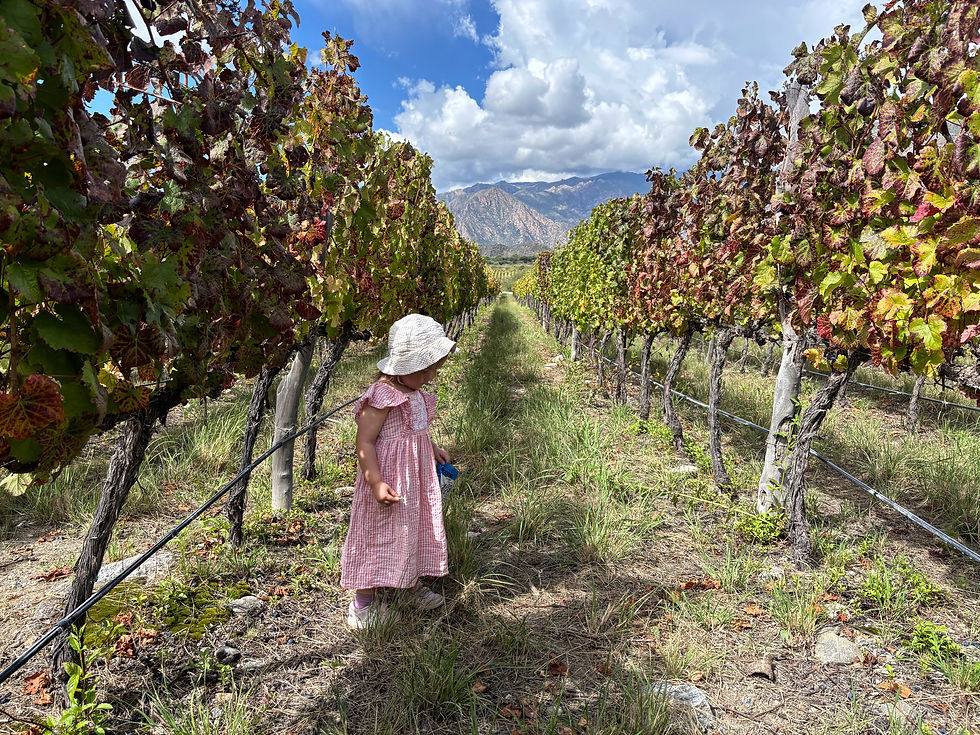
They have also recently expanded and turned the vineyard into a wine resort - so if you’re looking for somewhere special to stay I would definitely check that out! You can book it here: Piattelli Wine Resort Hotel.
As yesterday’s drive was pretty tiring, we took it easy for the rest of the day, enjoying the pool in our garden and then going out for a birthday meal in the evening at restaurant Pacha (great food if you're looking for something a bit fancier!).
Day 4: Cafayate to Cachí
Today was the longest drive of the entire road trip - mainly because pretty much all roads between Cafayate and Cachí are dirt roads! I had read recommendations of getting a 4x4 for this drive, but we just got a normal car in the end which was completely fine, just means it will take a bit longer. Do keep an eye on road conditions though (especially if you're here during rainy season), as only a few days before, there had been major closures due to flooding, meaning we would have had to go back the way we came from. A section of the road was still closed, but we were able to go via alternative route - more on that further down.
The landscapes on this drive were completely different from the drive down to Cafayate and changed a lot throughout the drive - the first half is almost desert-like and rocky, and has an otherworldly feel to it. It's less colourful that the red/purple rocks from the drive down from Salta, but with equally impressive rock formations.

One of the most unique things about this drive was driving through Quebrada de las Flechas. Flecha means arrow in Spanish and the unique rocks look like arrowheads pointing up next to the road. It was really special, and we had the road completely to ourselves which made the experience even more unique as we could stop in the middle of the road.
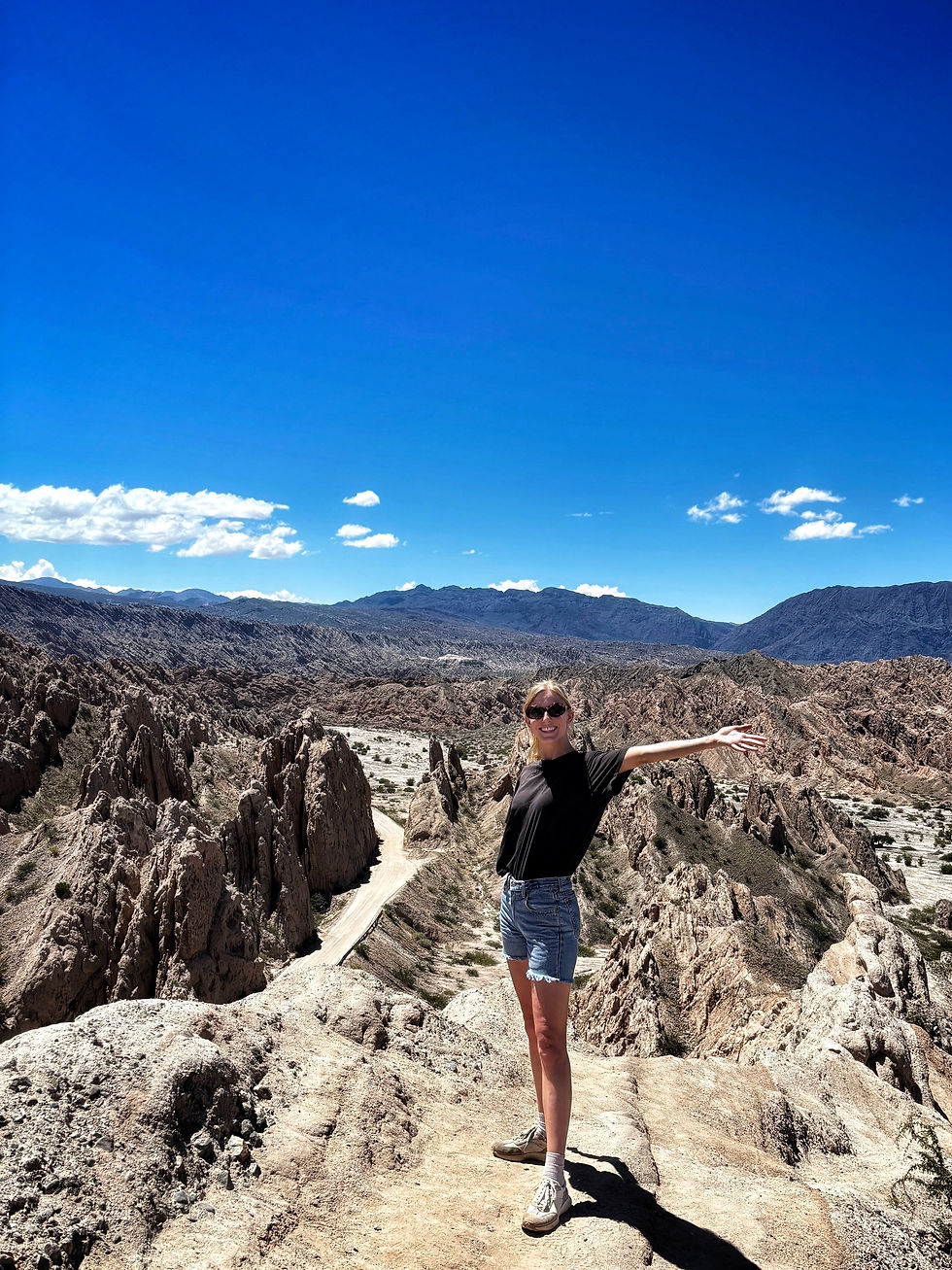
Soon after this drive is a great viewpoint Mirador El Ventisquero which is well worth stopping at - you climb up a short hill where you get amazing views over Quebrada de las Flechas. The path is a bit narrow and rocky getting there so I would be careful if going with kids - our daughter was napping in the car when we stopped here so we took it in turns instead. A short drive from here is the Monumento Natural Angastaco, which is another good pit stop to take in the dramatic landscape (and easier with kids!).

We decided to stop in the town Molinos for a break and had some incredible salteñas (small empanadas from the Salta regions). These are honestly delicious and in my opinion way better than the bigger empanadas you find in other parts of the country! Molinos is a small place, but there were a couple of restaurants to choose from and we also found a couple of playgrounds so it's a good place to let the kids have a little run around.

Shortly after Molinos, the Route 40 was closed so we had to take a detour along the Rio Calchaqui - luckily this didn't set us back too much and the road was really beautiful, and different. As it is right next to the river, the nature here was much greener with high green mountains and lots of cacti in the foreground.
We arrived in Cachí around dinner time and headed straight to our cabin, about a ten minute drive from Cachi in the hills. Though I did really like Cachí as a town and would have loved to spend more time there, this was a truly beautiful spot to stay as we were right in the middle of nature, watching the sun set over the hills and then falling asleep under a million stars.
Day 5: Cachí to Salta
We enjoyed a slow morning, watching the sun rise and slowly paint the hills orange, and I took my daughter for a little morning walk while my husband got everything ready.
After breakfast, we headed into Cachí where there was a market on in the square in the middle of the town. Cachí is not as big as Cafayate but still has plenty of shops and restaurants, and in the middle of the square is a big playground so we spent a bit of time there letting our daughter have a play before grabbing some salteñas for the road and starting today's drive.

We were told to not take the Route 42 (south of Cachí) unless driving in a 4x4 so instead went north on Route 40 until we reached Route 33. The recommendations might have changed since we went, but I would do a bit of research beforehand if this is something you're considering. As soon as you leave Cachí behind you'll see the big Cachí sign with snowcapped mountains in the background - definitely worth a stop and a photo (and our daughter liked climbing the big letters!).
The first part of Route 33 has the kind of long, straight road that you can find in places like Utah and Arizona - it's a really cool drive and we did make a few stops for photos on the way!

The next stop I would recommend is Mirador de la Ventanita de los Valles Calchaquies. It has a couple of market stalls where you can buy nuts, spices and souvenirs and you can walk up to the observation deck where you get beautiful views of the stripy, colourful mountains behind. You might also see a couple of foxes!
After this, it was nearly lunchtime so we stopped at Mirador Secretos del Cardonal in Parque Los Cardones. This vast park is home to the giant Cardón Cactus and has some short and manageable trails, as well as benches and restrooms, so perfect for a lunch break.
Once you leave the straight part of Route 33 behind, you start heading further up in the mountains. You'll really notice the temperature drop so have some jumpers handy! We also saw lots of vicuñas (similar to alpacas) on the sides of the road and crossing the road.
As you get higher up, the views are meant to be spectacular (especially viewpoints like Piedra del Molino and Cuesta del Obeispo). As you are really high up though, there is also a high risk of clouds gathering around this part of the drive - this is what happened to us and we saw absolutely nothing apart from milky white clouds! This was a drive I had really been looking forward to so I was very disappointed - even though in hindsight, driving through the fog on the serpentine roads was a pretty cool experience too. As we got lower, the clouds lifted and the landscape almost looked like it could be Iceland or Scotland - entirely different from what we had seen so far! (We also spotted a tarantula on the road...)
The final part of the drive was almost jungle-like and we reached Salta mid-afternoon. We finished the evening with dinner at Peña del Olivo. In Salta, peñas are traditional folk music restaurants where locals go to sing and dance until the early hours. They're not tourist traps, and I would highly recommend visiting one while you're here as they're great fun (my daughter especially loved it and joined in on the dancing)!
Day 6: Salta to Maimará
Today we headed north, leaving the Salta Province behind for the Jujuy Province. The first part of the road is mainly motorway (which felt strange after all the scenic drives so far!).
We stopped in San Salvador de Jujuy for lunch, which is the provincial capital and a big city. Parking was a bit tricky and it took us a while to find a spot, but we finally found a spot, handily next to a playground. We didn't spend a huge amount of time as it's mainly a big city, but it's a good halfway point and there were plenty of options for food.
The rest of the drive is more scenic, driving next to Rio Grande and the mountains. There's a couple of viewpoints along the way, especially as you pass Purmamarca. We stopped near Bodega Yanay, when we had almost reached Maimará, where we went for a quick walk and got some beautiful views.
We arrived at Dormir con Llamas - our accommodation for the next two nights - mid-afternoon, and this was one of our favourite places to stay! Our host Kely came and met us out on the road and showed us the way to where we were staying - a little eco cabin on a llama farm! There are a few different cabins and a communal kitchen, and the two hosts, Kely and Fran, live on site too in the main building. As well as the llamas, they also have a cat and a very friendly dog (my daughter was especially fond of the dog!) and the place is surrounded by nature with the colourful mountains in the background.
After settling in, we headed to the town Tilcara, about a ten minute drive north of Maimará and a slightly bigger town. This was a really charming place which had a great market in the main square where we bought a few presents and souvenirs before going for dinner at one of the restaurants nearby.
In the evening, we drove past a hill with a trail and decided to stop and explore it - it's called Plazoleta Maria Remedios del Valle and the walk up to the top is a bit steep at times, but the views of the coloured mountains are really beautiful - especially as we went at sunset!

Day 7: Salinas Grandes and Purmamarca
One of the main reasons we chose this road trip is because it has the salt flats, which neither of us had seen before! It's a full day trip from Maimara or Tilcara and you end up going back the way you came, so I would recommend spending at least 2 nights here to have the time to properly enjoy them!
We first stopped in Purmamarca which is only a short drive from Maimara and where you'll find the 7 Coloured Mountain which you can view by walking a short walk to an observation deck (you have to pay a small fee). Although a bit touristy, it is beautiful, and the town actually had a bit going on - a big market, food stalls and (of course) a great playground.

We then started making our way towards the salt flats, and this was probably one of my favourite drives of the entire road trip. It takes you up into the mountains on serpentine roads and views are just incredible! Especially the Mirador de la piedra sola and Mirador de la Cuesta de Lipán.

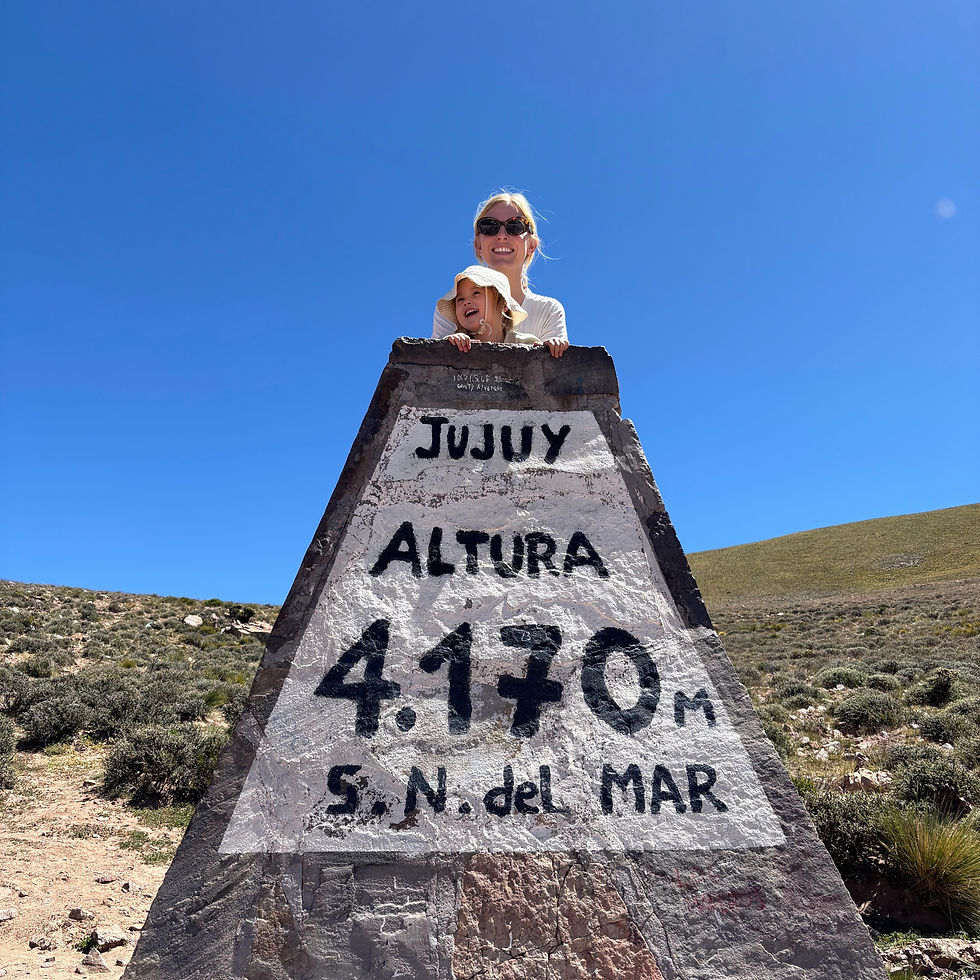
At the top, you'll find the Monolito 4170 MSNM which was the highest point we reached on this trip at an altitude of 4,170 metres. I definitely felt a bit lightheaded here, so we didn't want to stay for too long, but we got out and took a couple of photos before making our way down.
We made it to the Salinas Grandes just after lunch and it was definitely one of the highlights of the entire road trip! You pay a small fee to access the salt flats, and included in the fee there are people working there that can help you get photos. We had a lot of fun trying different optical illusions, taking silly photos and videos, and spent a good few hours here. There are some places to eat, but we had picked up some food in Purmamarca and eaten on the way so once we felt done here, we started making our way back the way we came.

In the evening, we went back to the viewpoint we went to the night before, but instead went to the one next to it, called Mirador del Monolito Maimará. This one was a bit easier to access than the one the night before, but the first one was still my favourite, even though the views were very similar. They are both well worth a visit, especially if you happen to be here at sunset as it really brings out the colours of the stone!

Day 8: Maimara back to Salta
As it was our last morning here, we wanted to spend some time with the llamas before leaving and Fran very kindly let our daughter feed the llamas! This was one of her highlights, and also gave us an opportunity to learn more about the place and how Fran and his partner Kely ended up there. Fran also told us about an alternative route back to Salta, through the jungle, which was slightly longer than going via the motorway but with beautiful views.

This was a really unique drive, which again felt completely different to the drives we had done so far on our trip. You're driving through the rainforest, with a few lookout points on the way and you can find wild roaming Argentinian horses on the side of the road.
About halfway to Salta is a lake called Diqua la Cienega where we were recommended to stop for lunch at Restaurante Dique La Cienaga, a clubhouse by the water famous for their fish and seafood - especially Pejerrey (also known as Argentinian silverside). We got a spot right next to the water and the food was delicious, it was basically the Argentinian version of British fish and chips! After lunch, we spent some time down by the lake before continuing.
The rest of the drive continues through the jungle until you get closer to Salta, and it's suddenly more farmed countryside. For our last night of this road trip, we had chosen to stay near the airport as we were flying to Buenos Aires early the next day.
For dinner, rather than heading into Salta, we headed in the opposite direction to the resort House of Jasmines Relais & Châteaux. This was such a gorgeous place and I wish we had known about it so we could have stayed here! The grounds are just beautiful, with rose gardens, a spa, a playground and a swimming pool, and the food in the restaurant was absolutely delicious. If you want to stay somewhere a bit fancier, I would highly recommend this place!

FAQs
Do I need a 4x4 for the northern Argentina road trip?
A standard car is fine for most of the route, including the Cafayate–Cachí dirt roads (Route 40). However, Route 42 south of Cachí does require a 4x4. Always check current road conditions before you go, especially during rainy season (December–March) when flooding can close routes.
How many days do I need for northern Argentina?
A minimum of 8 days gives you enough time to cover the main highlights without feeling too rushed. If you can stretch to 10–12 days, you'll have more flexibility for rest days which is something we'd definitely do if we went back.
Is northern Argentina good for families with young children?
Yes! With some planning it's a fantastic family destination. The key is to schedule long drives around nap times, stop regularly, and choose accommodations with outdoor space. Altitude is the main consideration — start in Salta to acclimatise gradually before heading higher.
What is the best time of year to visit northern Argentina?
Autumn (April–June) and spring (September–November) offer the most reliable weather with mild temperatures of 17–22°C. Summer (December–March) is hot and rainy with some flood risk, but the landscapes are lush and beautiful.
Do I need to speak Spanish in northern Argentina?
Basic Spanish is very helpful because many smaller towns and restaurants have limited English. Download Google Translate with offline Spanish before you go, and have key phrases ready.
Can you pay by card in northern Argentina?
Not always. Many smaller establishments, markets and rural accommodations are cash only. ATMs exist but often have daily withdrawal limits, so carry more cash than you think you need.
Summary
This road trip was absolutely incredible and the views throughout were stunning. I loved how the scenery was completely different day-to-day meaning just looking out of the window was special. This is also one of those trips that gave us the confidence to explore more - the idea of an 8 day road trip in Northern Argentina might not sound immediately family friendly but it proved that you can still have real adventures even with young kids.

It was tough but we had some truly special moments, if you have a big road trip coming up check out this blog post here: Road Tripping Abroad with a Toddler: Your Essential Guide
